
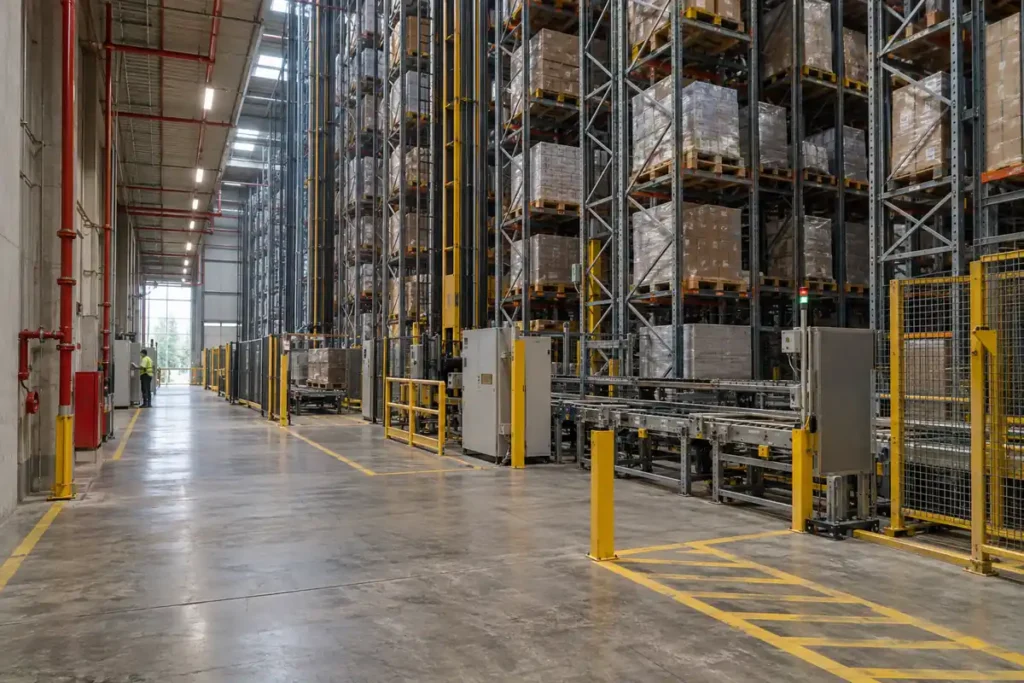
This guide starts with the project conditions that a buyer may need to reconcile: dense inventory, limited floor area, sharp outbound peaks, and heavy dependence on robots, conveyors, lifts, or other automated handling equipment. It frames the question as “Which stored goods, containers, rack geometry, building, automation controls, water supply, detection, emergency response, and approval inputs need to be reviewed together?” That is the practical starting point for ASRS system fire protection.
That is the working definition of ASRS system fire protection used in this guide: a project-level combination of fire suppression, detection, alarm, equipment response, access, evacuation, inspection, testing, maintenance, and change control. It is not a standalone ceiling sprinkler decision. The NFPA Research Foundation identifies storage density, storage height, and restricted firefighter access as factors that can change the fire-protection problem in automated storage and retrieval systems.–
This article is for warehouse owners, operations leaders, engineering teams, procurement managers, and system integrators preparing a high-bay automated storage project. It is not a substitute for a fire-protection engineer, structural engineer, licensed designer, AHJ review, insurer review, or local code adoption check. Those parties should use the ASRS system fire protection brief as a project input, not as an approval document.
Short answer: what a safe automated-storage fire review must cover
An automated-storage fire review can start with five questions before anyone fixes a sprinkler layout:
- What is stored, and how do the goods and packaging burn, deform, absorb water, or obstruct water movement?
- How are the goods held: pallets, cases, open-top containers, closed totes, bins, or another load unit?
- What does the storage geometry create: rack height, building height, horizontal flues, vertical flues, aisle width, equipment clearances, and concealed spaces?
- How will the building detect, suppress, alarm, isolate, and communicate a fire, including the relationship between automation and life-safety systems?
- Can employees, firefighters, maintainers, and emergency commanders understand and control the site during an incident?
The answer will not be the same for every ASRS system. The NFPA Research Foundation describes a wide set of variables, including commodity, container material and configuration, system type, energy sources, rack material, horizontal flues, and vertical clearance between sprinklers and the top of storage.– These variables define the ASRS system fire protection problem before a device schedule is selected.
The practical implication is simple: a design that begins with a product label such as “shuttle,” “crane,” “mini-load,” or “pallet” is incomplete. The equipment name identifies only one part of the hazard picture.
What “safety codes” means in an automated warehouse
This article does not treat “the fire code for an automated-storage warehouse” as a single document containing a universal design table. That assumption may omit other project review inputs. The NFPA Research Foundation describes ongoing work to identify automated-storage system types, existing protection guidance, gaps in knowledge, and the standards or recommended practices that may apply. It also notes that system configurations differ between manufacturers and that proprietary fire-test data can make standardisation difficult.– That limitation is central to ASRS system fire protection planning.
For a project, “safety codes” should be treated as a review stack rather than a single answer:
- The fire code adopted by the project jurisdiction and the applicable edition and local amendments of sprinkler and fire-alarm standards.
- Building, electrical, machinery, battery, rack, and structural requirements that affect fire risk or emergency access.
- Insurer or loss-prevention requirements that may be stricter than the minimum adopted code.
- The fire-protection engineer’s calculations, design basis, AHJ interpretation, plan review, inspection, and acceptance process.
- The automation supplier’s documented shutdown, alarm, reset, manual release, and recovery interfaces.
The exact stack varies by country, state, city, building use, commodity, and project contract. A US research report can help a buyer ask better questions, but it cannot stand in for the adopted rules at a site in another jurisdiction. The NFPA automated-storage project itself treats identification of applicable codes, standards, recommended practices, and other guidance as a distinct research task.– The local code review remains a core part of ASRS system fire protection.
GoASRS approaches this boundary from the logistics integration side. Hengyan’s company material describes the business as an intelligent warehouse robotics and systems integrator with software, hardware, and integration capabilities, including WMS, WCS, and RCS layers. A buyer still needs to clarify which automation interfaces must be documented for the wider engineering review. This does not establish fire-protection design credentials, sprinkler certification, fire testing, or code approval for a specific project.
For background on the automation layer, see how an ASRS system works and warehouse software layers. Those pages explain operational architecture; they should not be read as fire-code evidence. The NFPA Research Foundation automated-storage project summary is the external research source used for configuration diversity and the limits of a universal protection table.–
The design inputs that drive high-bay warehouse sprinkler design
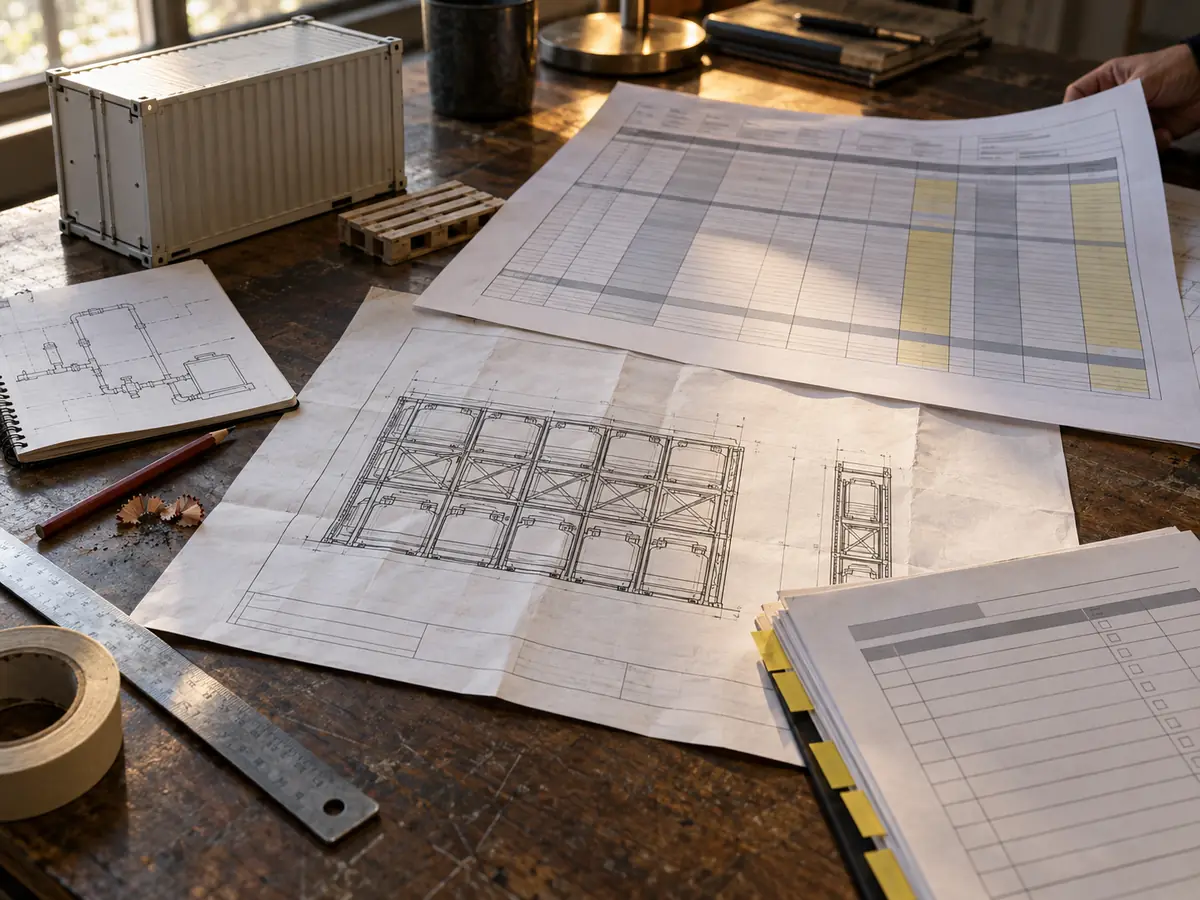
This article recommends establishing a design-input register early. It gives the fire engineer and AHJ a stable description of the proposed operation before the project team starts arguing about individual devices. It also gives procurement a way to compare bids without hiding different assumptions behind the same phrase, such as “high-density automation.” For ASRS system fire protection, that register is more useful here than an early generic sprinkler promise.
Commodity and packaging
Record the material category, product form, packaging layers, exposed plastic, paper or cardboard, wood components, liquids, aerosols, batteries, and any mixed-storage rules. The important question is not only the product name. It is what the fire-protection analysis sees at the storage face, inside the container, and in the vertical and horizontal gaps. This is a basic ASRS system fire protection input.
Do not replace a commodity assessment with a general statement such as “consumer goods” or “spare parts.” A mixed inventory can change the governing design case. If products change seasonally, the storage profile should explain how the fire design will be rechecked when the range changes.
Load unit and container construction
State whether the system stores pallets, cases, bins, totes, or another unit. Identify whether containers are open-topped, closed, perforated, nested, wrapped, or otherwise configured.
The design question remains project-specific rather than a universal verdict on every open-top container or every ASRS system. It is still a valuable procurement question for ASRS system fire protection: can the proposed protection place water where the burning material is likely to be, or will the load unit and rack geometry create shielding? The answer should remain tied to the project’s ASRS system fire protection design basis.
Rack, building, and flue geometry
Capture the maximum storage height, building clear height, rack construction, rack spacing, aisle width, horizontal flues, vertical flues, cross-aisles, equipment clearances, mezzanines, catwalks, conveyors, lifts, and concealed areas. The NFPA Research Foundation lists rack height, storage height, rack construction, aisle widths, horizontal and vertical flues, and accessibility among the variables for further analysis.–
The drawing package should show both the normal operating state and the maintenance state. A fire engineer needs to know what occupies a location, what moves through a clearance, and what can block access after power is removed. A rack elevation without the automation envelope may be insufficient to support the review inputs described here for ASRS system fire protection.
Automation and energy sources
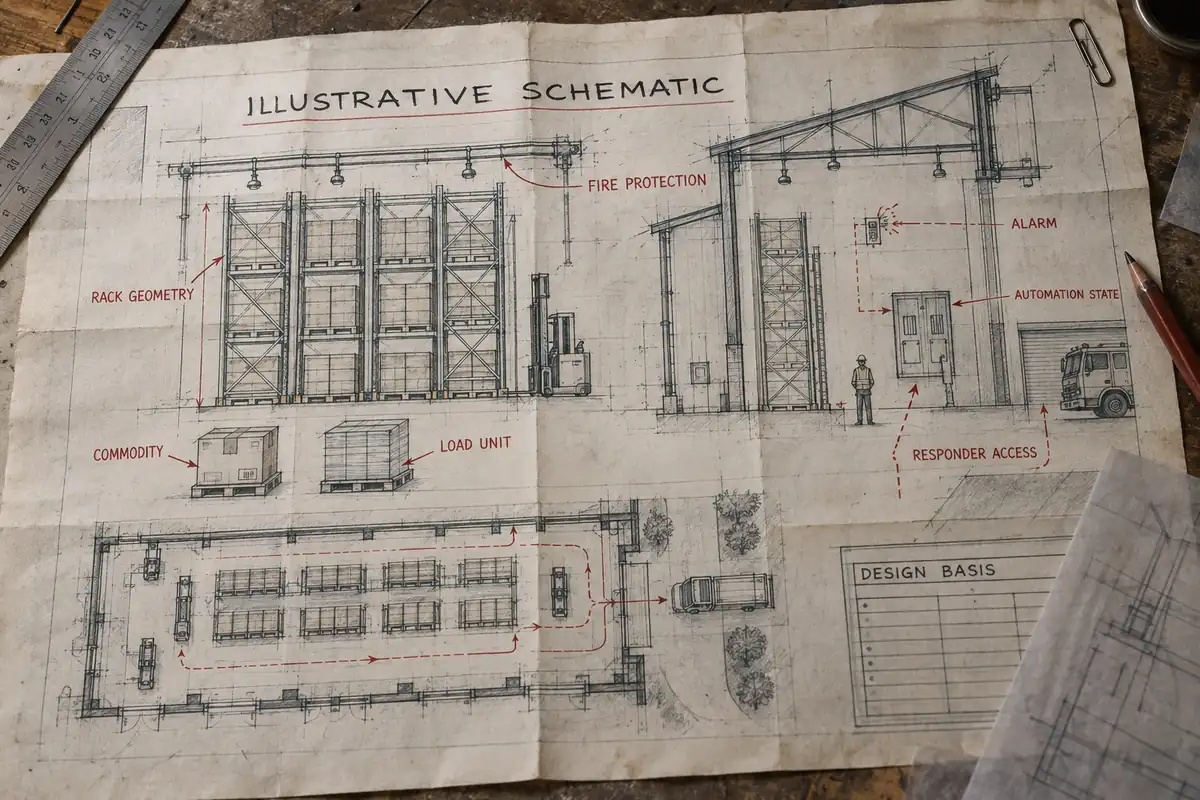
List cranes, shuttles, tote-handling robots, conveyors, lifts, transfer equipment, charging zones, batteries, electrical rooms, control cabinets, and maintenance areas. The project team should describe what happens when a detector or alarm operates: which devices stop, which loads remain suspended, which doors release, which zones isolate, and which manual controls remain available.
That sequence needs a responsible owner. A sprinkler designer may define a water-based protection function; an automation engineer may define motion control and safe stop; an electrical engineer may define isolation; an operations team may define evacuation and restart. A system integrator can coordinate the interfaces, but coordination is not the same as issuing a fire-protection calculation or an AHJ approval. The boundary matters in ASRS system fire protection.
Water supply and emergency response information
The design-input register should include the available water-supply information, fire department connections, alarm transmission path, fire pump and tank assumptions if applicable, drainage, smoke-control assumptions, fire doors, emergency lighting, access routes, staging areas, and site contact details. Specific flow, pressure, tank, head, spacing, and design-area values belong to the approved engineering design, not to a generic article.
The buyer should ask for a written list of assumptions and exclusions. If the design depends on a future water upgrade, a different commodity profile, or a particular container, that dependency should appear in the contract and commissioning plan. These assumptions should be visible in the ASRS system fire protection record.
Why ceiling-only thinking can fail the review
The phrase “sprinkler design” can narrow the discussion too early. Suppression is one part of the system, and its performance depends on the path between the discharge point and the burning fuel. Rack geometry, load-unit construction, storage height, flues, obstructions, detection time, alarm transmission, and firefighter access all shape the practical outcome.
FM Global’s report studies early detection, fire-source location, and local response as part of a smart sprinkler concept. The report describes sensors, location calculation, and dynamic sprinkler triggering in its research system, then identifies the need for further full-scale rack fire testing.–
The preceding research should not be rewritten as a purchase recommendation for every warehouse. The lesson is that detection, location, response timing, discharge, and access should be reviewed as connected engineering questions. A buyer should ask the design team to show the design basis, test evidence, limitations, and acceptance criteria for each proposed layer in the ASRS system fire protection plan.
This is also where automation changes the conversation. An automated system may stop moving loads, preserve a commanded position, isolate a zone, send an alarm to a control room, or require a manual recovery action. The safe sequence must be explicit. “The robots stop” is not enough: the project needs to state when they stop, what happens to a load in transit, how emergency personnel know the state, and how a restart is authorised after inspection.
For a broader view of system boundaries, buyers can compare pallet ASRS systems, mini-load ASRS, and shuttle ASRS versus crane-based ASRS. The comparison should focus on fire-design inputs and operating interfaces, not on assuming that an equipment category automatically selects a protection scheme.
Fire service response belongs in the design basis
A remote dashboard alarm cannot by itself demonstrate that the site meets all response requirements. People still need to evacuate, firefighters still need to understand the building, and responders still need a way to decide whether entry, ventilation, isolation, or defensive operations are appropriate. The NFPA Research Foundation report on storage-facility response identifies automated storage and retrieval systems, dense rack arrangements, elevated walkways, and emerging hazards as features that can complicate firefighting.–
The response plan should explain the site in the language a fire crew can use under pressure. That means clear information about building access, fire department connections, water sources, rack blocks, equipment rooms, battery or charging areas, manual controls, alarm zones, smoke movement assumptions, and areas that may be inaccessible after equipment stops. The plan should serve field response, be reviewed with the local fire service, and be updated when the facility changes. This response layer belongs in ASRS system fire protection.
The same NFPA report describes automatic sprinklers as a means of controlling a fire while recognising that fire crews may still need to complete suppression. It presents cooperation between the owner and responders as part of pre-incident planning.– This is why a procurement specification should ask for emergency information and response coordination, not only hydraulic drawings.
Access, collapse, and wet-load questions
High-bay projects need a written answer for how responders reach the incident area, how they identify a safe approach, and how the team evaluates damaged racks or loads after water application. The NFPA response research records concerns about large buildings, rack density, water supplies, and changing hazards; it separately discusses system impairment notifications, ventilation timing, and responder familiarity with the building and its systems.––––
These response inputs belong in the ASRS system fire protection review, alongside the project’s access and recovery assumptions.
One discussion in that report describes a rack-collapse concern in which water absorbed by cartons added weight to a fire-damaged storage arrangement. That is a reported field discussion, not a statistical rule or a prediction for every automated-storage warehouse.– The useful design question for ASRS system fire protection is whether the project has a post-fire structural assessment process and a clear handoff between the fire service, owner, structural engineer, and recovery contractor.
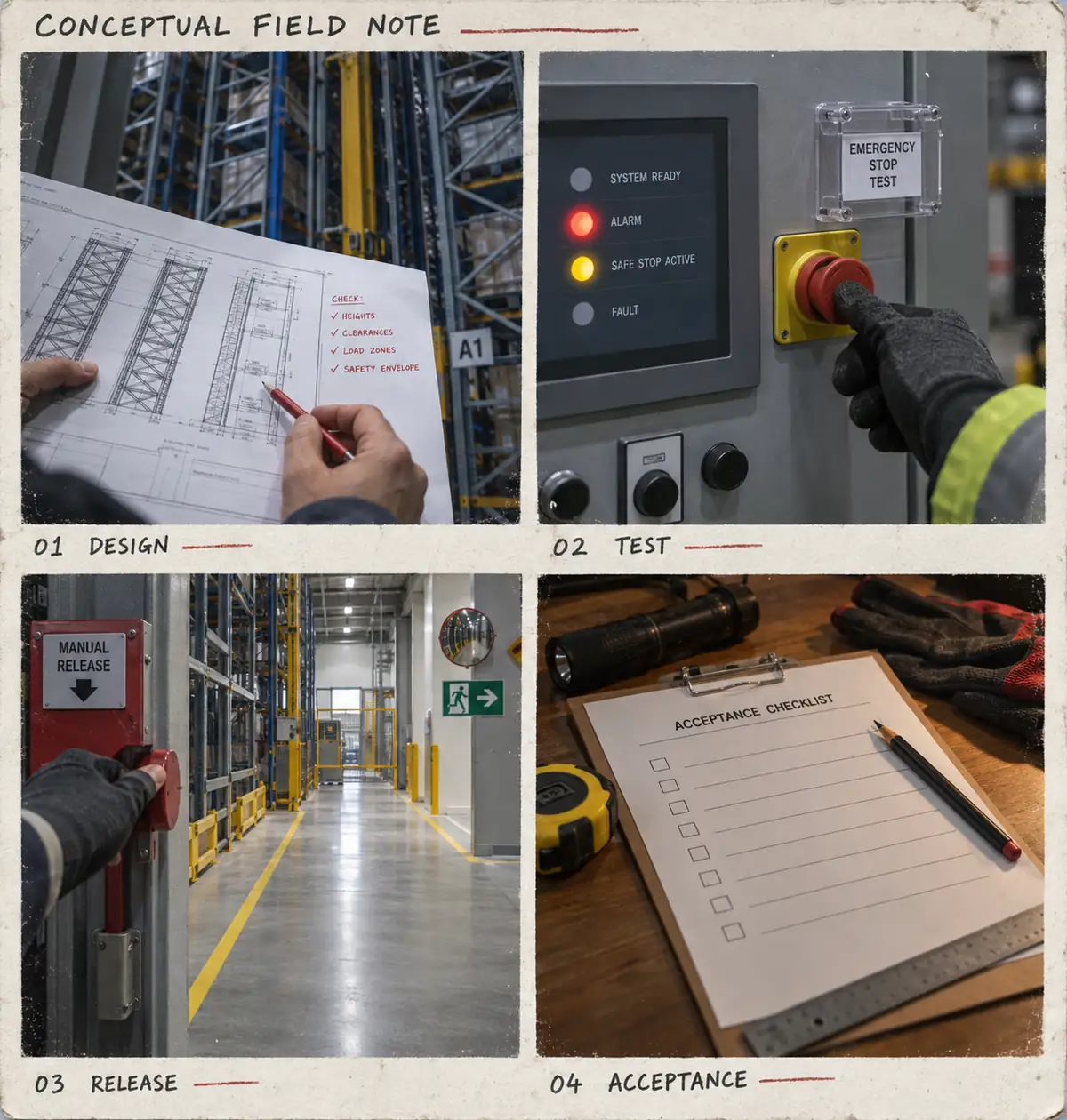
Top-loading systems can create a different response picture from a conventional open aisle. The same report records concerns involving stopped robots, blocked visibility, enclosed spaces, and the need for maintenance personnel to perform emergency release actions.– The project should therefore document manual access and release procedures for the ASRS system fire protection review before commissioning, then train the people who may be asked to use them.
For owners still comparing operating models, multi-client warehouse automation is a useful adjacent decision topic because multi-client inventory creates a further need for clear commodity profiles, storage rules, and change control. Those conditions belong in the ASRS system fire protection brief, and the fire-protection conclusion remains project-specific.
Automation interfaces that deserve a formal review
The fire engineer may not own the automation controls, and the controls engineer may not own the fire code interpretation. A formal interface matrix can record the boundary between them. It should name the initiating signal, receiving system, intended action, manual override, confirmation signal, responsible party, and test method. This article treats it as a proposed ASRS system fire protection deliverable.
At minimum, review these interface groups:
- Detection and alarm: Which signals reach the automation control layer, the building alarm panel, the control room, security, and the response contact list?
- Motion and energy: Which robots, cranes, shuttles, conveyors, lifts, chargers, and process machines stop or isolate, and under what conditions?
- Load state: What happens to a pallet, case, tote, or container already in motion, held by a gripper, positioned on a lift, or waiting at a transfer point?
- Human access: How do authorised personnel perform emergency release, inspection, isolation, and reset without creating a second hazard?
- Recovery: Who confirms that the area is safe, who approves restart, and how are damaged locations blocked from future storage?
This matrix is a practical integration document, not a claim that a particular WES, WCS, RCS, or robot has a universal fire function. Company material reviewed for this article describes WMS, WCS, RCS, equipment connections, and customer-system integration, but it does not document fire-code certification or an approved fire-safety module. The matrix should be filed with the ASRS system fire protection design record.
The interface review should use the actual equipment list and control philosophy. A buyer can use ASRS system integration as a software and equipment-boundary reference, then require the project team to add the fire alarm, shutdown, emergency release, and inspection states that apply to the proposed site. That interface record is part of ASRS system fire protection, not a substitute for the building fire-protection design.
Inspection, testing, maintenance, and change control
Fire protection does not end at acceptance. The NFPA automated-storage research summary states that fire-protection systems need proper design, installation, inspection, maintenance, and testing.– The project owner should assign these responsibilities in operational language rather than leaving them as a generic “comply with code” clause. That lifecycle is part of ASRS system fire protection.
Create a controlled record for:
- The approved commodity and packaging profile.
- Maximum storage height, rack arrangement, flues, aisles, and equipment clearances.
- Container and pallet types included in the design basis.
- Detection, alarm, suppression, isolation, and automation response assumptions.
- Inspection, testing, maintenance, impairment notification, emergency contacts, and change triggers for new products, packaging, batteries, storage locations, rack extensions, software changes, and equipment additions.
The NFPA response research notes that warehouse products, storage arrangements, and technology can change, and records concern about inadequate communication when systems are impaired.–– A change-control process should make the next review visible to operations, facilities, the integrator, the fire-protection engineer, the insurer, and the AHJ when required.
The operational rule is not “never change the warehouse.” It is “do not let a material change pass without checking the assumptions that made the fire design acceptable.” That distinction matters in seasonal, multi-client, e-commerce, and manufacturing environments.
A buyer’s RFQ checklist for automated storage fire safety
An RFQ should request enough information for bidders to price and design against the same boundary. It should not ask a supplier to promise a generic compliance outcome before the site conditions are known. The scope should name the ASRS system fire protection assumptions used for the quotation.
Ask each bidder to identify:
- The assumed jurisdiction, code editions, local amendments, insurer criteria, AHJ milestones, and professional responsibility boundaries.
- The commodity, packaging, load-unit, container, pallet, battery, and mixed-storage assumptions.
- The maximum storage and building heights, rack construction, flues, aisles, equipment envelopes, and concealed areas.
- The proposed roles for suppression, detection, alarm, smoke management, emergency power, shutdown, isolation, access, and recovery.
- The required calculations, test evidence, approval documents, acceptance tests, inspection records, training, maintenance, and change-control deliverables.
Request an assumptions-and-exclusions schedule with the commercial proposal. If one offer assumes closed cases and another assumes open-top containers, their prices and designs are not comparable. If one offer includes automation shutdown testing and another leaves it to the owner, the apparent equipment price can conceal different risk and commissioning responsibilities. This comparison step can help a buyer identify scope differences between offers.
Cost varies with the building, commodity, load unit, storage geometry, water supply, detection and alarm scope, automation interfaces, approvals, installation, testing, maintenance, and future-change obligations. Buyers should request a project-specific quotation rather than use an unconditioned industry range.
For a wider commercial comparison, see ASRS system cost and ASRS total cost of ownership. Those pages can frame automation economics, but they do not replace a fire-protection engineer’s project quotation.
Common mistakes that delay approval
Mistake 1: Starting with a device instead of a hazard profile
Selecting a head, detector, or in-rack arrangement before the commodity and geometry are fixed reverses the engineering sequence for ASRS system fire protection. The remedy is a signed design-input register and a list of conditions that trigger a redesign.
Mistake 2: Treating an equipment label as a fire classification
“Pallet storage automation” or “shuttle-based storage automation” does not describe the commodity, container, rack construction, water path, or emergency access in enough detail for ASRS system fire protection. Equipment type is a useful starting field, not a complete protection basis.
Mistake 3: Giving the software team an undefined emergency requirement
“Stop the system on alarm” leaves unanswered what happens to moving loads, suspended loads, blocked aisles, stored energy, manual release, alarm acknowledgement, and restart. Convert the phrase into an interface matrix and test cases for ASRS system fire protection.
Mistake 4: Treating a research report as a code book
NFPA Research Foundation and FM Global documents can sharpen questions and explain research boundaries. They do not automatically become the adopted code for a project. The FM Global report itself describes a research programme and points to the need for further full-scale testing.–
Mistake 5: Freezing the design at handover
New packaging, a new battery type, a changed storage height, a rack extension, or a software and equipment change can alter the assumptions. The owner needs a live change-control process for ASRS system fire protection, not only a commissioning binder.
FAQ
Is there one sprinkler design for every ASRS system?
No. The suitable design depends on the commodity, load unit, container, storage and building heights, rack construction, flues, equipment, water supply, detection, local code, insurer criteria, and AHJ review. NFPA research identifies substantial variation in automated-storage configurations and protection questions.– The ASRS system fire protection answer is therefore project-specific.
Does a high-bay automated warehouse always need in-rack sprinklers?
This article does not make that universal claim. The answer belongs to the project’s fire-protection engineer and AHJ after reviewing the ASRS system fire protection design basis, adopted requirements, test evidence, and site conditions. A generic equipment name is insufficient on its own to select the arrangement. The final ASRS system fire protection selection remains a documented engineering decision.
Can a WES or WCS be treated as the fire-safety system?
No. The project’s fire and controls professionals should confirm whether WES, WCS, and related control layers participate in documented alarm, equipment-state, shutdown, or recovery interfaces, and how those interfaces relate to building fire-alarm, suppression, emergency-response, inspection, and approval responsibilities. The exact interface needs project-specific engineering and testing within the ASRS system fire protection review. That review should record the responsible party for every alarm and reset action. It should remain part of the ASRS system fire protection handover package.
What information should an integrator provide to the fire engineer?
Provide accurate equipment layouts, rack elevations, operating envelopes, load-unit details, battery and charging information, control states, alarm and shutdown sequences, manual release procedures, maintenance access, recovery steps, and the changes that can occur during operation. The fire engineer also needs the commodity and storage assumptions that govern the ASRS system fire protection design. Those inputs should be frozen before the quotation is treated as comparable.
Can research from the United States be applied to an overseas project?
It can inform questions and risk discussions, but it cannot replace the adopted rules, professional design, insurer review, or AHJ process in another jurisdiction. The research used here is mainly from US fire-safety organisations, so international projects need a local code and approval review for ASRS system fire protection.
What is the next step before requesting an automation quotation?
Prepare the design-input register, site and rack drawings, commodity profile, water-supply information, emergency-response assumptions, and automation interface requirements. Then ask the fire-protection engineer, AHJ representatives where appropriate, and shortlisted integrators to confirm the ASRS system fire protection scope and dependencies before comparing offers. This can give the design review a shared set of inputs.
Conclusion: make fire protection a system boundary, not a late add-on
ASRS system fire protection is a coordination problem with life-safety consequences. High storage, dense rack geometry, containers, automation motion, water delivery, detection, alarms, firefighter access, and post-fire recovery need to be reviewed together. A strong project starts by defining the hazard and the operating state, then assigns each decision to the right engineer, authority, insurer, owner, or integrator. This is the decision framework proposed in this article for ASRS system fire protection.
GoASRS can be considered from the logistics integration perspective: the automation layout, software layers, equipment states, and operating changes need to fit a wider project record that fire and building professionals can review. The available company material supports a systems-integration position, but it does not support claims of fire-protection certification, sprinkler design approval, or a completed fire-safety case.
The practical next action is to turn the checklist in this guide into a project workshop agenda. Bring the commodity owner, warehouse operator, automation integrator, fire-protection engineer, structural and electrical disciplines, insurer, and AHJ into the same design-basis conversation before equipment and protection assumptions become difficult to change. The meeting can record agreed ASRS system fire protection actions.
Planning a Warehouse Automation Project?
Our team has delivered 50+ ASRS systems across retail, manufacturing, and logistics. Tell us about your project and we will get back to you within 24 hours.
Thank you!
We received your message and will get back to you within 24 hours.