
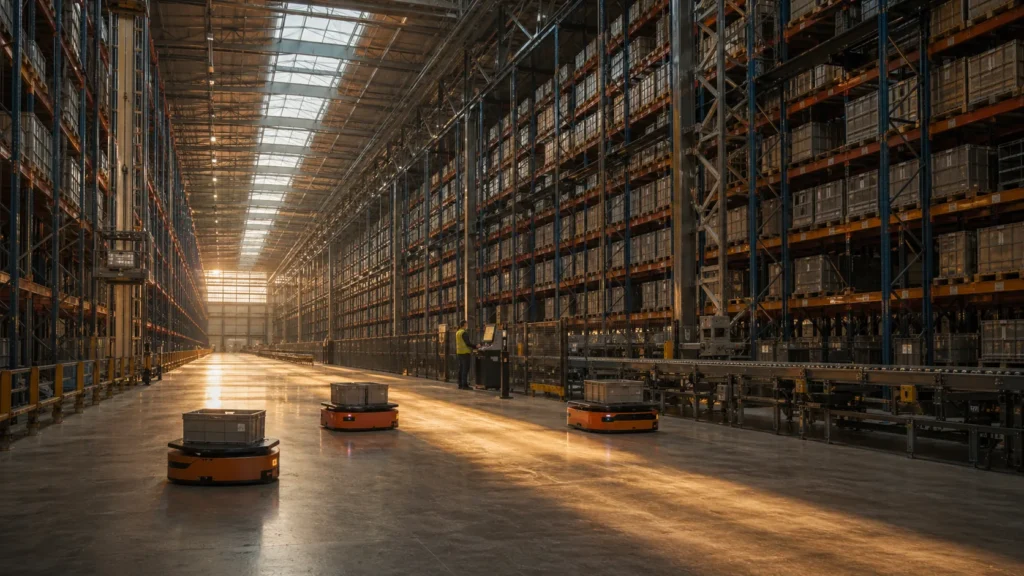
Short answer: The top ASRS manufacturers and vendors in 2026 include Dematic, Daifuku, SSI Schaefer, KNAPP, AutoStore, Swisslog, Hai Robotics, Geek Plus, Addverb, and integrators such as GoASRS. The right choice depends less on brand size and more on load type, throughput, software integration, support coverage, and whether your warehouse needs one technology or a multi-vendor automation system.
Choosing an ASRS manufacturer has become harder because the market no longer has one obvious category. Some vendors build pallet cranes. Some specialize in cube storage, shuttle systems, AMRs, or case-handling robots. Others act as system integrators and combine equipment, conveyors, WMS/WES/WCS software, controls, and project delivery into one operating system.
I've spent the past eight years helping companies select, deploy, and integrate automated storage and retrieval systems. During that time, I've worked with hardware from nearly every major ASRS manufacturer on this list. Some projects involved a single vendor's turnkey solution. Others required stitching together robots, racking, conveyors, and software from three or four different suppliers into a system that actually worked.
This comparison draws from that hands-on experience. It is not a paid ranking, and no vendor paid to be included. The goal is to give you an objective view of who builds what, where each company excels, and how to decide which approach fits your operation.
Best ASRS Manufacturers by Use Case
If you are building a shortlist quickly, start with the operating problem rather than the vendor logo.
| Warehouse requirement | Vendors or partner type to evaluate first | Why this fit usually works |
|---|---|---|
| Large distribution center with many automation zones | Dematic, Swisslog, Daifuku, GoASRS | These projects need full-system engineering, controls, software, and long-term support rather than only robots. |
| Pallet ASRS, unit-load cranes, or heavy manufacturing logistics | Daifuku, Dematic, SSI Schaefer | These providers have deeper experience in fixed infrastructure and high-reliability material handling. |
| High-density tote, carton, or bin storage | AutoStore, SSI Schaefer, KNAPP, Hai Robotics | These vendors focus on dense storage and goods-to-person retrieval patterns. |
| Pharmaceutical, healthcare, or regulated picking | KNAPP, Swisslog, Daifuku | Software validation, traceability, and regulated workflows matter as much as equipment. |
| E-commerce or 3PL with mixed technologies | GoASRS, Swisslog, Dematic, Geek Plus, Hai Robotics | Multi-client or high-SKU operations often need WES orchestration across robots, conveyors, workstations, and storage zones. |
| Cost-sensitive automation in Asia, the Middle East, or emerging markets | Addverb, Geek Plus, Hai Robotics, GoASRS | Regional support, hardware cost, and deployment flexibility can matter more than the largest global brand. |
How We Evaluated These ASRS Companies
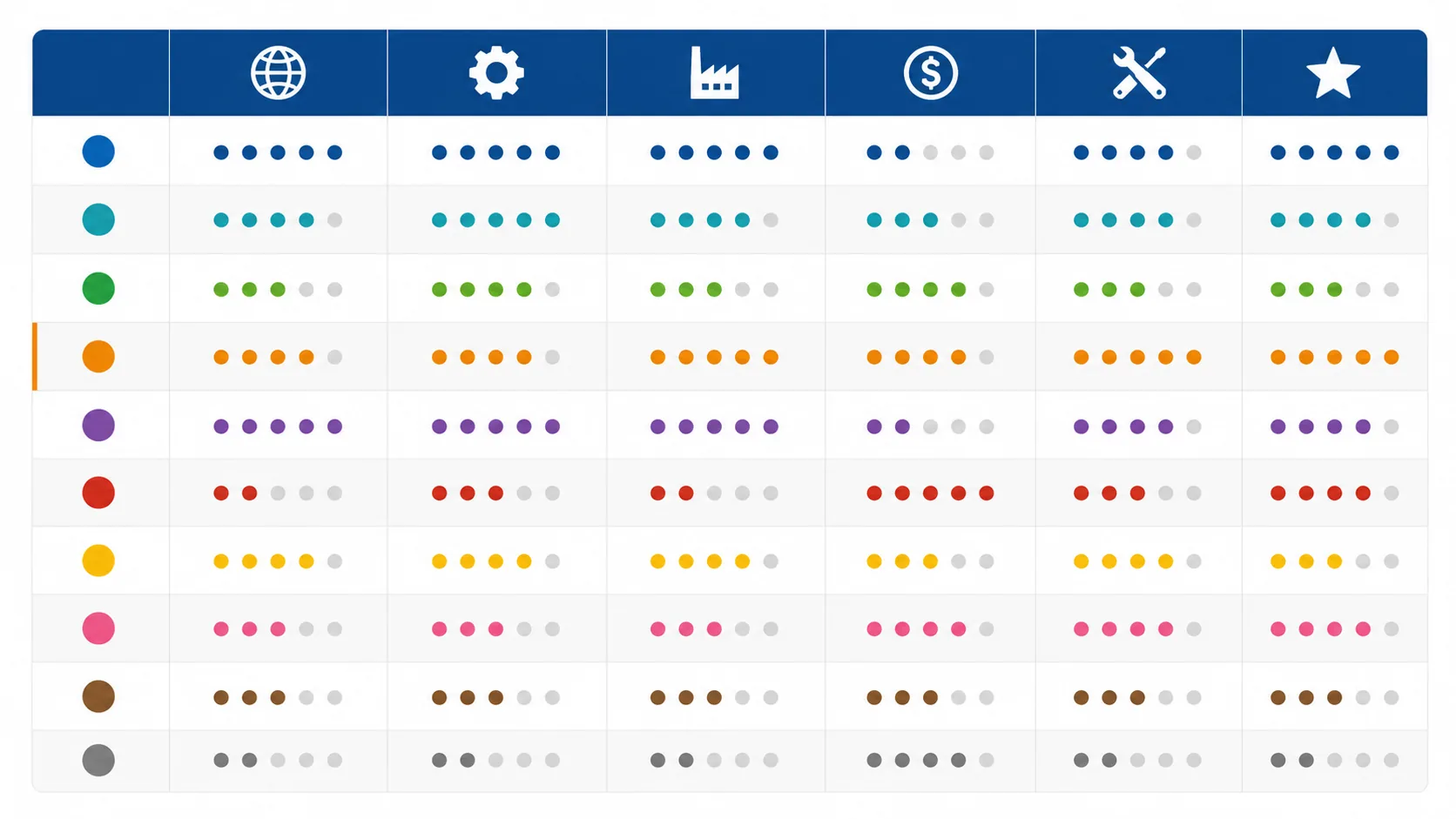
Ranking ASRS manufacturers is tricky because they don't all compete in the same space. A company that dominates pallet-handling crane systems isn't directly comparable to one that builds bin-carrying robots. So rather than a simple 1-through-10 ranking, we evaluated each provider across five dimensions:
Technology breadth — Does the company offer one product or a full portfolio? Single-product specialists can be the best choice for specific use cases, but multi-technology providers offer more flexibility as your needs evolve.
Deployment scale — How many systems has this company installed globally? Track record matters when you're committing $2M–$15M to a project. Check our ASRS pricing guide for detailed cost breakdowns by system type.
Industry coverage — Some ASRS manufacturers focus on specific verticals (pharmaceutical, automotive, e-commerce). Others serve a broad range. Your industry experience requirements should guide this filter.
Post-deployment support — Hardware breaks. Software needs updates. How responsive is the vendor after commissioning? This is where many companies get burned — the sales team disappears and you're left with a support ticket queue.
Total cost of ownership — Not just the purchase price, but maintenance contracts, spare parts availability, software licensing, and upgrade paths over a 10–15 year system lifecycle.
The Top ASRS Manufacturers and Providers in 2026
1. Dematic (KION Group)
Headquarters: Atlanta, USA (parent company KION Group in Frankfurt, Germany) Core technology: Full-spectrum — unit load cranes, multishuttle, AMR, goods-to-person, sortation Key industries: E-commerce, retail, grocery, manufacturing, 3PL Official source: Dematic
Dematic is one of the largest global warehouse automation providers, with a broad portfolio covering storage, conveying, sortation, picking, software, and lifecycle services. Their acquisition by KION Group in 2016 gave them access to a large industrial automation platform and a global service network. They offer everything from traditional stacker cranes to newer robotic shuttle systems.
The strength here is scale and breadth. If you need a single vendor to handle a 500,000+ square foot distribution center with multiple automation zones, Dematic can deliver a complete package. The tradeoff is cost and lock-in: large turnkey systems can make future changes expensive when hardware, software, controls, and support all sit inside one vendor ecosystem.
2. Daifuku
Headquarters: Osaka, Japan Core technology: Unit load AS/RS, mini load, sorting systems, cleanroom automation Key industries: Automotive, electronics, semiconductor, airport baggage handling Official source: Daifuku
Daifuku is one of the world's largest material handling companies, with deep experience in fixed automation, manufacturing logistics, airport systems, semiconductor handling, and cleanroom environments. Their ASRS division is particularly strong where precision, reliability, and environmental control are non-negotiable.
What sets Daifuku apart is their engineering depth in extreme environments. Cleanroom-rated ASRS, freezer-rated systems for cold chain, and explosion-proof configurations for chemical storage — they've built systems for conditions that would destroy most competitors' hardware. If your application involves unusual environmental requirements, Daifuku should be on your shortlist.
3. SSI Schaefer
Headquarters: Neunkirchen, Germany Core technology: Shuttle systems, mini load, unit load, picking solutions, racking Key industries: Retail, e-commerce, pharmaceutical, manufacturing Official source: SSI Schaefer
SSI Schaefer built their reputation on shuttle-based ASRS, and they remain the market leader in that category. Their Cuby shuttle system and newer 3D-Matrix solution offer some of the highest throughput densities available. They also manufacture their own racking — a vertical integration advantage that gives them tighter control over system tolerances.
The company operates over 70 production facilities worldwide and has installed systems in 40+ countries. Their strength is mid-to-large scale distribution centers where shuttle technology makes sense. For smaller installations or pure robotic solutions, other providers may offer better value.
4. KNAPP
Headquarters: Hart bei Graz, Austria Core technology: OSR Shuttle, Pick-it-Easy robots, Open Shuttle AMR, pharmacy automation Key industries: Pharmaceutical, healthcare, fashion, e-commerce Official source: KNAPP
KNAPP carved out a dominant position in pharmaceutical and healthcare logistics — a vertical where regulatory compliance, serialization tracking, and zero-error picking are mandatory. Their OSR Shuttle system is installed in thousands of pharmacies and hospital logistics centers across Europe and North America.
Beyond pharma, KNAPP has expanded aggressively into fashion and e-commerce fulfillment. Their Pick-it-Easy robotic picking stations combine vision systems with robotic arms for automated piece-picking — one of the hardest problems in warehouse automation. If your operation handles pharmaceutical products or requires FDA-compliant logistics, KNAPP is a top-tier choice.
5. GoASRS (HengYan Technology)
Headquarters: Hangzhou, China Core technology: Multi-vendor system integration, WES platform, AMR fleet management Key industries: Retail, e-commerce, manufacturing, 3PL, cold chain Official source: GoASRS
Full disclosure — this is us. GoASRS operates as a system integrator rather than a single-product manufacturer. That distinction matters: instead of selling you one company's robots and forcing your operation to fit their hardware limitations, we design systems that combine the best available technology from multiple manufacturers.
Our warehouse execution system sits above individual hardware controllers and orchestrates mixed fleets — bin robots from one supplier, pallet AMRs from another, shuttle systems from a third — all coordinated through a single software layer. This approach delivered a 630% efficiency gain for Li-Ning and powered Decathlon's robot deployment using hardware from multiple manufacturers.
The honest limitation: we're not the right fit if you need a simple, single-technology installation with 20 robots and basic racking. For that, going direct to a robot manufacturer is faster and cheaper. Where we add value is complex, multi-zone operations where no single vendor's product line covers all requirements — and where long-term flexibility matters more than minimizing upfront vendor count.
Browse our full AMR hardware lineup and industry solutions to see the range of configurations we support.
6. Hai Robotics
Headquarters: Shenzhen, China Core technology: ACR (Autonomous Case-handling Robot) systems Key industries: E-commerce, 3PL, retail, manufacturing, pharmaceutical Official source: Hai Robotics
Hai Robotics pioneered the ACR category — robots that autonomously pick and carry individual totes or cases from high-bay racking. Their HAIPICK system helped create a middle ground between traditional shuttle ASRS and floor-level AMR goods-to-person systems.
The speed of Hai Robotics' growth is remarkable. They went from startup to global player in under seven years, driven by a product that fills a genuine gap between traditional shuttle systems (expensive, fixed infrastructure) and floor-level AMRs (limited storage density). Their robots reach heights that ground-based systems cannot, offering storage density comparable to shuttle ASRS at a lower infrastructure cost.
7. AutoStore
Headquarters: Nedre Vats, Norway Core technology: Cube storage — grid-based robotic storage and retrieval Key industries: E-commerce, retail, 3PL, micro-fulfillment, pharmaceutical Official source: AutoStore
AutoStore invented cube storage and remains the best-known company offering this specific technology at scale. Their system uses a grid of stacked bins with robots operating on top, retrieving bins and delivering them to workstations.
The cube storage concept offers the highest storage density of any ASRS technology — up to 4x more items per square meter than traditional shelving. That makes AutoStore particularly attractive for operations with expensive real estate or space constraints. The limitation is throughput: because robots must dig through stacked bins to reach lower items, retrieval times increase for less-popular SKUs. High-velocity operations with 50,000+ daily order lines may find the system bottlenecks at peak periods.
8. Swisslog (KUKA Group)
Headquarters: Buchs, Switzerland (parent company KUKA/Midea Group) Core technology: AutoStore integration, shuttle systems, AGV/AMR, palletizing robots Key industries: E-commerce, grocery, healthcare, manufacturing Official source: Swisslog
Swisslog occupies an interesting position as both an ASRS manufacturer and a system integrator. They build their own shuttle and conveyor systems, but they're also the world's largest AutoStore integrator — meaning they design and install AutoStore cube storage systems with their own software layer on top.
Their acquisition by KUKA (and subsequently Midea Group) gives them access to industrial robotics expertise that few warehouse automation companies can match. If your project involves heavy robotic palletizing, depalletizing, or mixed-case building alongside ASRS, Swisslog's combined capability is hard to beat.
9. Geek Plus
Headquarters: Beijing, China Core technology: AMR (goods-to-person robots), sorting robots, forklift AGVs Key industries: E-commerce, retail, manufacturing, 3PL Official source: Geek Plus
Geek Plus is the world's largest AMR company by deployed robot count — over 30,000 robots operating in 40+ countries. Their product line spans goods-to-person shelf-carrying robots (similar to the original Kiva/Amazon Robotics concept), sorting robots, and autonomous forklifts.
The company's scale gives them a cost advantage that smaller AMR manufacturers struggle to match. If your primary need is a goods-to-person picking system with hundreds of mobile robots, Geek Plus offers competitive pricing and proven reliability at scale. Their limitation is the same as most single-technology providers: once your needs extend beyond what AMRs can handle (very heavy loads, extreme heights, ultra-high-speed sortation), you'll need additional vendors.
10. Addverb Technologies
Headquarters: Noida, India Core technology: Multi-deep shuttle ASRS, sorting robots, AMR, pick-to-light Key industries: E-commerce, FMCG, pharmaceutical, manufacturing Official source: Addverb Technologies
Addverb is the newest company on this list and represents the emergence of India as a serious player in warehouse automation. Founded in 2016, they've grown to 2,000+ employees and deployed systems across India, Australia, Europe, and North America. Their Cruiser multi-deep shuttle system and Zippy sorting robots have gained traction in markets where established European and Japanese vendors historically dominated.
What makes Addverb worth watching is their aggressive pricing combined with increasingly mature technology. For operations in South Asia, the Middle East, or cost-sensitive markets globally, Addverb offers ASRS capability at price points 20%–40% below European equivalents. The tradeoff is a shorter track record and smaller global service network compared to companies with 30+ years of installations.
ASRS Manufacturers Comparison Table
| Company | HQ | Core Technology | Best For | Global Installations | Price Tier |
|---|---|---|---|---|---|
| Dematic | USA/Germany | Full spectrum | Large-scale DC | 6,000+ | Premium |
| Daifuku | Japan | Cranes, cleanroom | Automotive, semiconductor | 20,000+ | Premium |
| SSI Schaefer | Germany | Shuttle systems | Mid-large distribution | 10,000+ | Mid-High |
| KNAPP | Austria | Shuttle, pharmacy | Healthcare, fashion | 5,000+ | Mid-High |
| GoASRS | China | Multi-vendor integration + WES | Complex multi-zone | 50+ enterprise | Mid |
| Hai Robotics | China | ACR robots | Flexible storage | 1,000+ | Mid |
| AutoStore | Norway | Cube storage | Space-constrained | 1,250+ | Mid-High |
| Swisslog | Switzerland | Shuttle + AutoStore | Grocery, healthcare | 4,000+ | Mid-High |
| Geek Plus | China | AMR fleet | High-volume picking | 30,000+ robots | Mid-Low |
| Addverb | India | Shuttle, AMR | Cost-sensitive markets | 250+ | Low-Mid |
ASRS Vendor Shortlist by Buying Intent
Different search terms usually signal different buyer questions. Use the table below to match your internal discussion to the right shortlist.
| If your team is searching for… | The real question is usually… | Pages to review next |
|---|---|---|
| ASRS manufacturers | Which companies can build the storage and retrieval system? | Types of ASRS systems, ASRS system cost |
| ASRS vendors | Who should we ask for a proposal? | How to choose ASRS system, ASRS implementation timeline |
| ASRS system manufacturers | Do we need an OEM or an integrator? | Warehouse automation system integrator, ASRS system integration |
| Best ASRS systems | Which technology fits our operation? | Shuttle ASRS vs crane ASRS, Mini load ASRS |
| Automated storage and retrieval system companies | Who can handle hardware, software, and support? | Products overview, WES software |
How to Choose: Single Manufacturer vs. System Integrator
This is the decision that trips up most companies evaluating ASRS manufacturers. The choice isn't just "which vendor" — it's "what type of relationship do I need?"
When a Single ASRS Manufacturer Makes Sense
Go direct to a manufacturer when:
- Your requirements fit cleanly within one product category (e.g., you need shuttle ASRS and nothing else)
- You value a single point of accountability over flexibility
- Your operation is relatively straightforward — one building, one automation zone, predictable growth
- You're comfortable with that vendor's proprietary software and don't anticipate needing to integrate third-party systems later
The advantage is simplicity. One contract, one support number, one software platform. The risk is lock-in: if your needs change or the vendor's technology falls behind, switching costs are enormous.
When a System Integrator Makes Sense
Work with an integrator when:
- Your warehouse needs multiple automation technologies (robots + conveyors + shuttle + sortation)
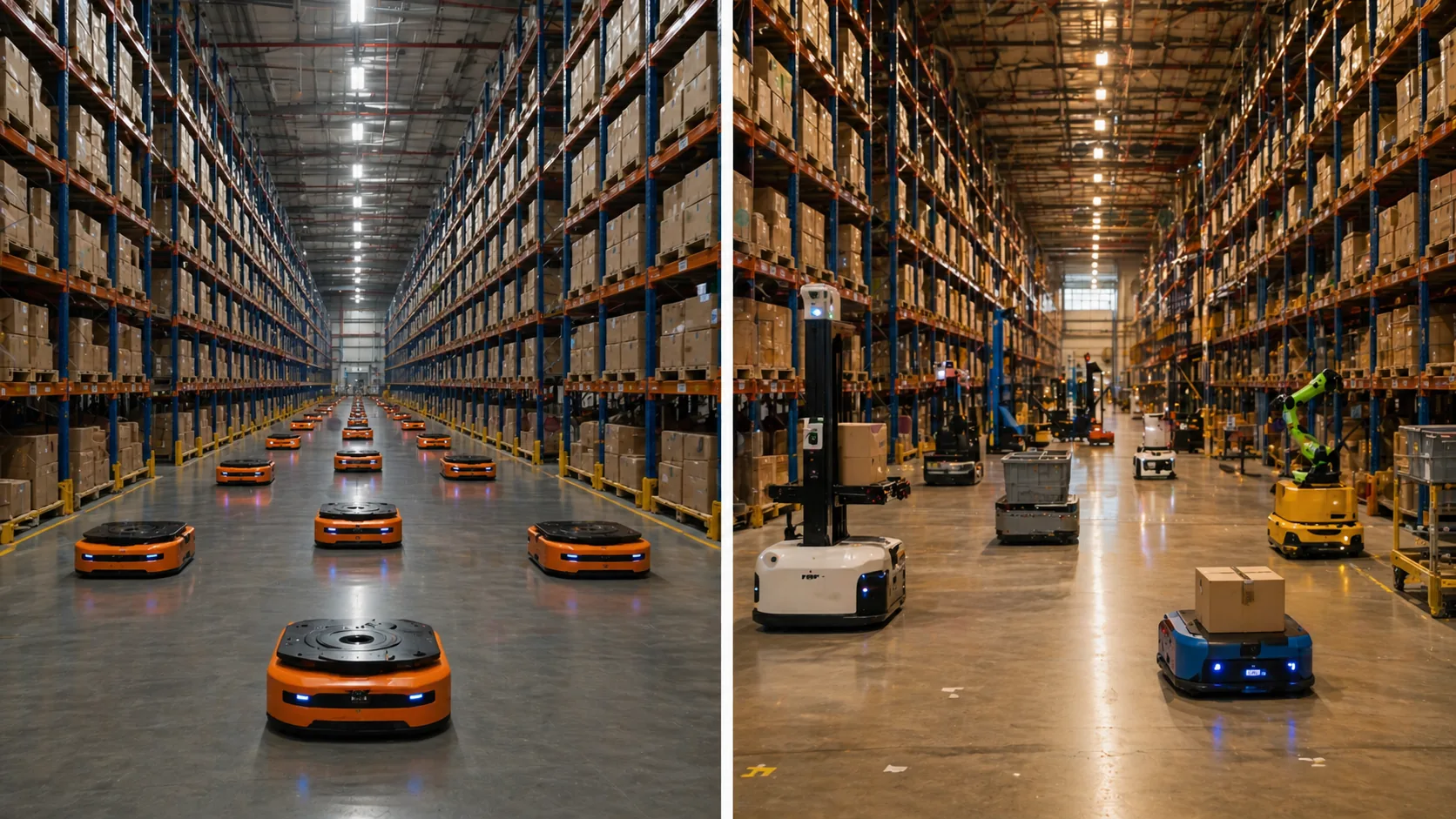
- You want to select best-in-class hardware for each function rather than accepting one vendor's full lineup
- Your operation spans multiple buildings or regions with different requirements
- You need a warehouse execution system that coordinates across vendor boundaries
- Long-term flexibility and vendor independence are priorities
The advantage is optimization — you get the best robot for bin handling, the best shuttle for buffering, the best conveyor for transport, all working together. The risk is integration complexity: if the integrator doesn't have deep software capability, you end up with a Frankenstein system that nobody can maintain.
Decision Framework
Ask yourself these five questions:
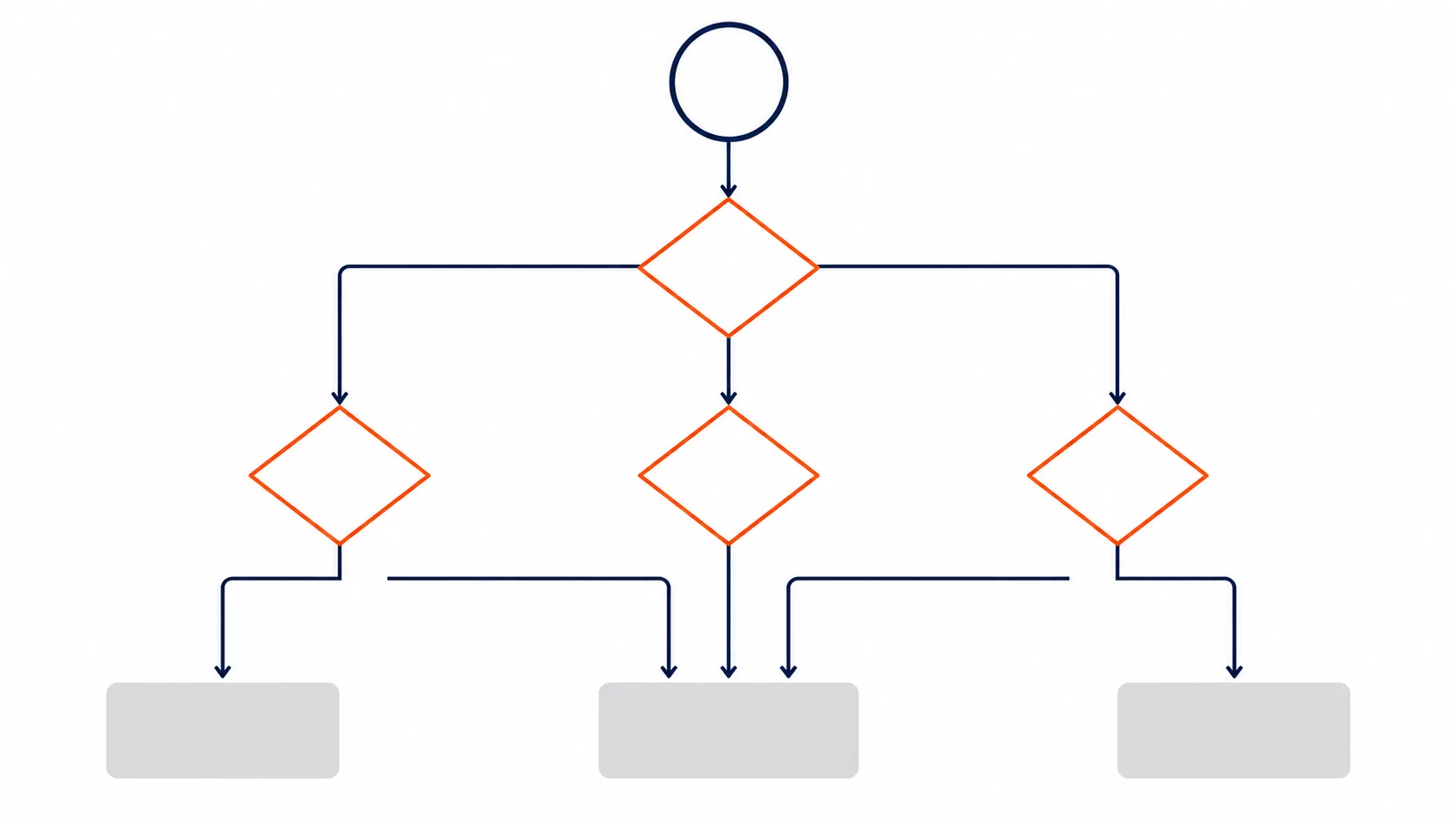
- How many automation technologies do I need? If the answer is one, go direct. If two or more, consider an integrator.
- Will my requirements change in the next 5 years? If growth is unpredictable, integrator flexibility has value.
- Do I have internal automation engineering staff? If yes, you can manage multi-vendor complexity yourself. If no, you need a partner who can.
- What's my tolerance for vendor lock-in? Proprietary systems are simpler today but constrain you tomorrow.
- Is my project a single site or multi-site? Multi-site operations almost always benefit from an integrator who can standardize across locations.
What to Look for Beyond the Brand Name
The ASRS manufacturer you choose matters less than most people think. What matters more:
Software maturity — The physical hardware is the easy part. The WMS/WES integration, the algorithm that decides which robot picks which order, the dashboard that tells your ops team what's happening in real time — that's where projects succeed or fail. Ask every vendor for a live software demo, not just a hardware showroom tour.
Reference customers in your industry — A company that's deployed 10,000 systems in automotive doesn't automatically know how to handle e-commerce peak seasons. Ask for references in your specific vertical, at your approximate scale, deployed within the last 2 years.
Spare parts and service SLA — Get the maintenance contract details before signing the purchase agreement, not after. What's the guaranteed response time? Where's the nearest spare parts warehouse? What happens if a critical component fails at 2 AM on Black Friday?
Upgrade path — ASRS systems last 15–20 years mechanically, but the software and controls need updating every 3–5 years. What does the vendor's technology roadmap look like? Will they support your system in 2035, or will they try to sell you a complete replacement?
Explore the different types of ASRS systems to understand which technology categories match your operational requirements before engaging with specific vendors.
Frequently Asked Questions
What is the difference between an ASRS manufacturer and an ASRS vendor?
An ASRS manufacturer usually builds a specific hardware platform such as stacker cranes, shuttles, cube storage, ACR robots, or AMRs. An ASRS vendor may be a manufacturer, distributor, integrator, or software-led automation partner. Buyers should ask whether the company owns the equipment, integrates third-party equipment, or provides the WES/WCS software layer.
Who is the largest ASRS manufacturer in the world?
Daifuku, Dematic, and SSI Schaefer are usually among the largest global material handling and ASRS providers by revenue, installed base, and project scale. The answer depends on whether you count only ASRS hardware, total warehouse automation revenue, AMR robot count, or full material handling systems.
How much does an ASRS system from a top manufacturer cost?
Prices range from $500,000 for a small robotic goods-to-person system to $25 million+ for a large-scale automated distribution center. The specific manufacturer matters less than the technology type, system size, and integration complexity. See our complete ASRS pricing guide for detailed breakdowns.
Can I mix ASRS equipment from different manufacturers?
Yes, but it requires a capable system integrator and a software layer (typically a WES) that can communicate with each vendor's hardware controllers. This multi-vendor approach is increasingly common in large operations where no single manufacturer's product line covers all requirements.
Which ASRS manufacturer is best for e-commerce?
There's no single answer. For cube storage in space-constrained facilities, AutoStore leads. For large-scale AMR fleets, Geek Plus and Hai Robotics offer proven solutions. For complex multi-zone operations combining multiple technologies, a system integrator like GoASRS can design the optimal mix. Your order profile, SKU count, and throughput requirements determine the best fit.
Which ASRS vendors should a US buyer shortlist first?
For large US distribution centers, start with Dematic, Swisslog, Daifuku, SSI Schaefer, and AutoStore integrators. If the project needs mixed robots, conveyors, storage zones, and WMS/WES integration, include at least one independent system integrator so you can compare single-vendor lock-in against a multi-vendor architecture.
Should I choose the cheapest ASRS vendor?
Usually no. The lowest equipment quote can become expensive if the project needs custom building work, weak software integration, poor spare parts support, or later expansion. Compare total cost of ownership, support SLA, WES/WMS integration scope, and future upgrade path before comparing only hardware price.
How long does it take to install an ASRS system?
Timeline varies by complexity: 3–6 months for a robotic goods-to-person system with 50–100 robots, 9–12 months for a shuttle-based system, and 12–18 months for a large-scale multi-technology installation. Site preparation, software integration, and testing typically account for 40%–60% of the total timeline.
Next Steps
Choosing an ASRS manufacturer is a decision you'll live with for 10–15 years. Take the time to visit reference sites, run pilot tests where possible, and evaluate the software as carefully as the hardware.
If your project involves multiple automation technologies or you're not sure which approach fits your operation, we can help you map requirements to the right combination of hardware and software. Get a consultation — we'll give you an honest assessment of whether a multi-vendor integration approach makes sense for your specific situation, or whether going direct to a single manufacturer is the smarter path.
Planning a Warehouse Automation Project?
Our team has delivered 50+ ASRS systems across retail, manufacturing, and logistics. Tell us about your project and we will get back to you within 24 hours.
Thank you!
We received your message and will get back to you within 24 hours.