
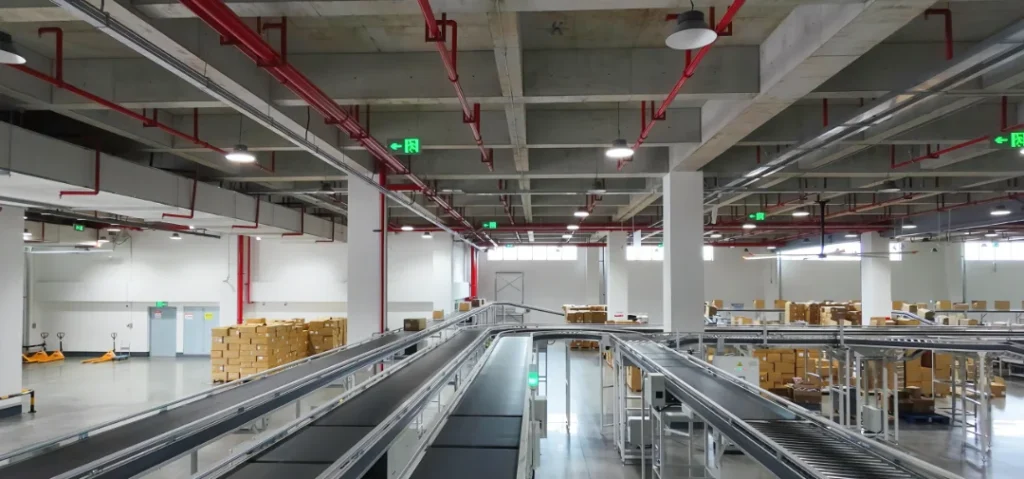
A warehouse automation system integrator is the partner that turns equipment, software, controls, layout, data, and after-sales support into one working logistics system. Equipment vendors can supply robots, conveyors, storage hardware, or software modules. A system integrator is responsible for making those parts fit the real warehouse operation.
Many companies start with a simple question: if automated equipment, ASRS, AGVs, AMRs, WMS, WES, conveyors, and control systems are already available on the market, why not buy directly from equipment manufacturers?
The short answer is that warehouse automation is not a product purchase. It is an operating system change. A single piece of equipment can move, lift, store, or transport goods. A complete warehouse automation project must connect inbound flow, storage rules, picking logic, replenishment, packing, shipping, inventory accuracy, exception handling, software interfaces, maintenance responsibility, and future expansion.
Short answer: A warehouse automation system integrator is needed when the project involves multiple equipment types, multiple vendors, WMS/WES/WCS integration, operational process redesign, or long-term support responsibility. The integrator reduces the risk of isolated equipment, unclear vendor responsibility, brittle software interfaces, and layouts that cannot scale with future business growth.
This article is adapted from Hengyan Technology's latest Chinese article on why smart logistics projects need integrators, expanded for overseas buyers evaluating ASRS and warehouse automation projects.
What a Warehouse Automation System Integrator Does
A warehouse automation system integrator designs, coordinates, implements, and supports a complete automation solution across hardware, software, controls, and operations.
That role usually includes:
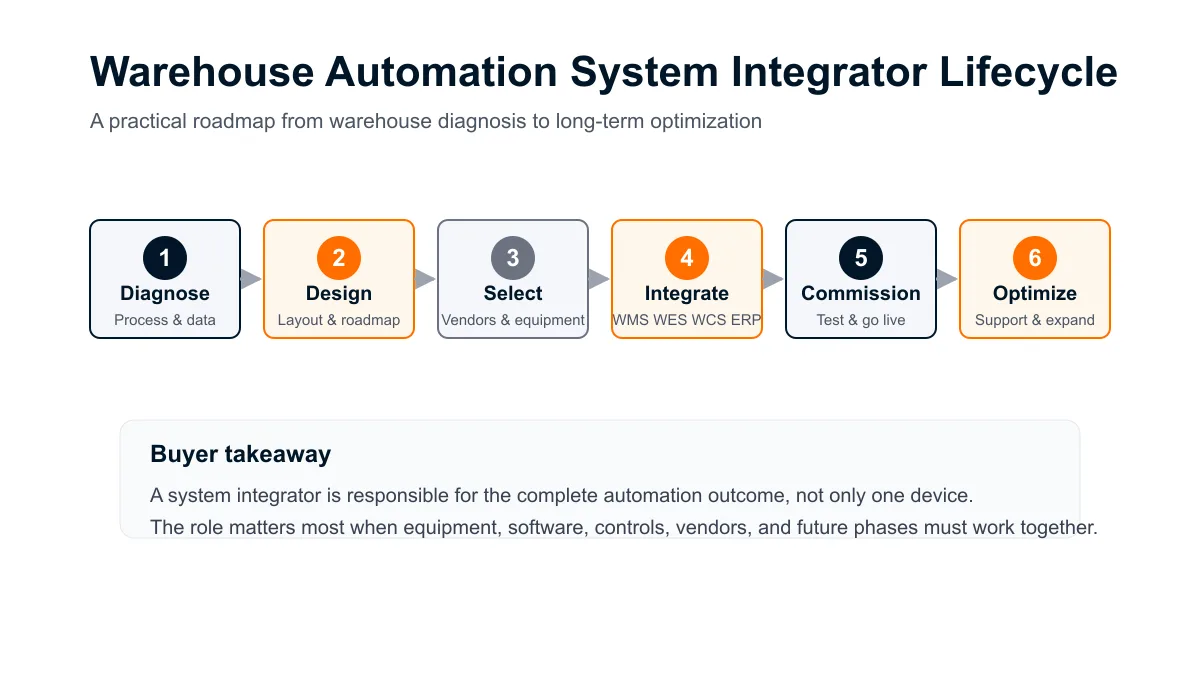
- Site survey and process diagnosis
- Solution design and layout planning
- Equipment selection across ASRS, AGV, AMR, conveyor, picking, sorting, and storage systems
- WMS, WES, WCS, ERP, PLC, scanner, and robot fleet integration
- Project management across multiple vendors
- Installation, commissioning, testing, and go-live support
- Training, maintenance planning, and post-go-live optimization
- Expansion planning for phase two or phase three projects
The key point is not that the integrator "adds another middle layer." The key point is that the integrator owns the full system outcome.
In a simple equipment purchase, the buyer may receive a robot or machine that works according to its technical specification. In an integrated warehouse automation project, the buyer needs the entire logistics process to work: orders must be released correctly, stock must be stored in the right place, tasks must be assigned to the right equipment, exceptions must be handled, and the operation must keep running when demand changes.
That is a much broader responsibility.
Equipment Vendor vs System Integrator
The difference between an equipment vendor and a system integrator is not a question of quality. Many equipment vendors build excellent products. The difference is project scope and responsibility.
An equipment vendor is usually optimized to design, manufacture, sell, install, and service its own product line. A system integrator is optimized to assemble the right combination of hardware, software, controls, layout, and operating logic around the customer's scenario.
| Buyer concern | Equipment vendor | Warehouse automation system integrator |
|---|---|---|
| Starting point | Own product catalog | Customer process and business requirement |
| Best fit | Defined equipment need | Multi-zone, multi-system automation project |
| Vendor selection | Usually limited to own product line | Can coordinate multiple equipment and software suppliers |
| Software scope | Often product-level controller or interface | End-to-end WMS, WES, WCS, ERP, PLC, and data flow |
| Responsibility boundary | Product performance | System performance and operational outcome |
| After-sales model | Own equipment only | One project owner across vendors and subsystems |
| Expansion planning | Product upgrades | Phase-by-phase logistics roadmap |
This distinction matters because warehouse automation rarely runs as a single isolated machine. A pallet ASRS may connect to conveyors, forklifts, scanners, doors, WMS, ERP, and shipping systems. A goods-to-person project may combine bin robots, picking stations, replenishment zones, manual exception areas, label printing, packing, and carrier handoff. A manufacturing site may connect AGVs, WIP storage, MES, ERP, and production lines.
The more systems involved, the more important the integrator becomes.
Why Standard Equipment Is Not Enough
Automated equipment is often standardized for reliability, manufacturing efficiency, and repeatable deployment. Warehouses are not standardized in the same way.
Every warehouse has its own mix of:
- SKU size, weight, and handling requirements
- Inbound and outbound order patterns
- Peak season volatility
- Labor availability
- Building height and column grid
- Existing WMS, ERP, MES, or legacy software
- Manual zones that cannot be automated immediately
- Safety rules and maintenance capability
- Customer service-level agreements
- Future expansion plans
An equipment-only approach can create a mismatch. The product may be technically good, but the solution may not fit the warehouse scenario.
For example, a standard AGV solution may move pallets well, but it may not solve the real bottleneck if the issue is order release, station congestion, or inventory accuracy. A shuttle ASRS may deliver high throughput, but without the right WES logic it may overload picking stations during peak waves. A conveyor system may move cartons quickly, but without clear WCS and exception handling it may create jams that no vendor wants to own.
A system integrator starts from the operating problem, not from a product list.
For buyers still choosing between ASRS types, start with our How to Choose ASRS System guide and the broader ASRS warehouse layout guide. Equipment selection should follow the warehouse operating model, not the other way around.
The Real Value: Scenario Fit
The Chinese article describes this as "equipment limitation vs scenario fit." That is the first reason smart logistics projects need integrators.
An equipment manufacturer may naturally promote the products it manufactures. That is normal. But a warehouse automation project may need several equipment families and several software layers:
- Pallet ASRS for bulk storage
- Mini-load ASRS or bin robots for small parts
- AMRs or AGVs for flexible movement
- Conveyors for stable flow between zones
- Picking stations for operator productivity
- Sortation for outbound handling
- WES for orchestration
- WMS for inventory and warehouse transactions
- WCS and PLCs for machine control
- ERP or MES integration for business and production data
The integrator's job is to select, combine, and coordinate those elements around the customer's actual work process.
That may mean using one vendor for storage equipment, another vendor for mobile robots, another vendor for conveyors, and a WES layer to coordinate them. It may also mean deciding not to automate a zone yet because the business case is weak or because a later expansion would make more sense.
A good integrator does not pile up equipment. It builds a system.
Multi-Vendor Projects Create After-Sales Risk
The second reason buyers need a logistics system integrator is after-sales responsibility.
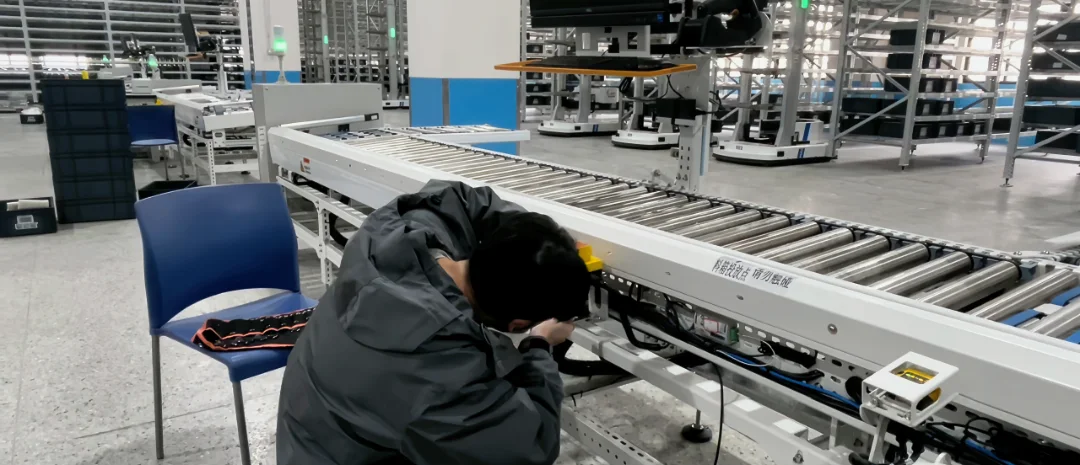
A complete smart logistics system often combines equipment and software from multiple suppliers. If the buyer manages every supplier directly, troubleshooting can become slow and politically difficult.
Common problems include:
- The robot vendor says the issue is caused by WMS data.
- The WMS vendor says the issue is caused by the automation controller.
- The conveyor supplier says the issue is upstream release logic.
- The controls team says the equipment signal is correct, but the business process is wrong.
- The operations team sees downtime, but no vendor owns the full recovery path.
This is where many automation projects become frustrating after go-live. The buyer did not buy one system. The buyer bought several products and inherited the integration burden.
A system integrator reduces that risk by acting as the single responsible project window. The integrator coordinates suppliers, diagnoses cross-system issues, and owns the escalation path.
In practical terms, the buyer should not need to run a vendor meeting every time a tote is delayed, a barcode fails, a robot mission times out, or a conveyor buffer is blocked. The project should have one support owner who can look across software, equipment, controls, and operations.
That support model is especially important for 3PL, e-commerce, manufacturing, cold-chain, and semiconductor warehouses where downtime affects customer commitments or production continuity. See our ASRS for 3PL warehouses and ASRS for e-commerce fulfillment guides for examples of high-volatility operating environments.
One-Stop Accountability Is Not Just Convenience
One-stop support sounds like a service feature, but in warehouse automation it is also a risk-control mechanism.
When multiple systems work together, failures often cross boundaries. A "robot problem" may actually be a release-sequence problem. A "WMS problem" may actually be a scan confirmation problem. A "conveyor problem" may be caused by station balancing or upstream batch logic.
If each vendor only looks at its own scope, the warehouse loses time. The integrator's job is to connect the dots.
This is why buyers should ask a direct question before signing: who owns system-level performance after go-live?
Good answers include:
- One escalation window for the whole project
- A documented responsibility matrix
- Cross-vendor incident diagnosis
- Remote and onsite support process
- Spare parts and maintenance planning
- Post-go-live performance review
- Continuous optimization roadmap
Weak answers usually sound like: "Each supplier will support its own equipment."
That may be acceptable for a simple machine purchase. It is not enough for a warehouse automation system.

WMS, WES, WCS, and ERP Make Integration More Important
The third reason integrators matter is software and data.
Modern warehouse automation is not only about machines moving faster. It is about whether business data, warehouse decisions, machine control, and physical execution stay aligned.
Most enterprise projects involve several layers:
| Layer | Typical role | Integration risk |
|---|---|---|
| ERP | Business records, purchasing, sales orders, production orders, finance | Poor master data or unclear business status can block warehouse execution |
| WMS | Inventory, locations, receiving, picking, replenishment, shipping | Order release and inventory updates must match automation timing |
| WES | Real-time orchestration across equipment, stations, and labor | Poor priority rules can overload one zone while another sits idle |
| WCS | Machine-level routing and equipment commands | Conveyor, crane, lift, and shuttle logic must match the physical layout |
| PLC/device layer | Sensors, motors, safety signals, machine states | Signal timing and safety interlocks must be tested under real conditions |
The exact split varies by project. Some WMS platforms include WES functions. Some WCS vendors include routing logic. Some robot vendors include a fleet manager. The question is not which label sounds better. The question is who owns each decision and each event.
For a deeper technical view, read our ASRS system integration guide and WES vs WMS vs WCS explanation.
The point for buyers is simple: equipment selection and software architecture should be designed together. If the software layer is treated as an afterthought, the equipment may work but the warehouse may not.
Short-Term Project vs Long-Term Logistics Roadmap
The original Hengyan article frames another key difference: equipment vendors often focus on the current product installation, while integrators plan the full lifecycle.
That matters because many warehouses do not automate everything in one phase. A realistic roadmap may look like this:
- Phase 1: improve storage density and core inbound/outbound flow
- Phase 2: add picking automation or goods-to-person workstations
- Phase 3: connect more production lines, shipping zones, or multi-building flows
- Phase 4: optimize WES logic, analytics, labor planning, and predictive maintenance
If the first project is designed only for the immediate equipment purchase, expansion becomes expensive. The site may run out of buffer space, software interfaces may need to be rebuilt, conveyors may not have spare capacity, or the WMS/WES data model may not support the next workflow.
A system integrator should design with expansion in mind:
- Space reservation for future equipment
- Software interfaces that can absorb additional zones
- Data ownership rules that remain stable as volume grows
- Modular layout that avoids dead-end automation
- Capacity planning for peak periods, not only average days
- Maintenance access and safe operational fallback
This is one reason many Hengyan and GoASRS customers continue into second-phase and third-phase projects. The value is not only the first installation. The value is the ability to build a flexible automation platform that grows with the business.
For financial planning, this should be reflected in the 5- to 10-year view of automation cost. Our ASRS total cost of ownership guide explains why integration, support, software, downtime risk, and expansion planning affect the real cost more than equipment price alone.
When You Can Buy Directly From an Equipment Vendor
This article is not saying every project needs a full system integrator.
Direct equipment purchase can work when:
- The process is simple and isolated
- The buyer already has a strong internal automation engineering team
- The software interface is minimal or already standardized
- Only one equipment vendor is involved
- The project does not need cross-vendor responsibility
- Future expansion is limited
- The buyer is comfortable owning integration and support coordination
For example, replacing a standalone conveyor section or buying a small number of mobile robots for a controlled process may not require a large integration program.
But the risk changes when the project touches core warehouse flow. If automation affects inventory accuracy, order fulfillment, production supply, shipping deadlines, or multi-vendor software, the integrator role becomes much more important.
When a System Integrator Is the Better Choice
A warehouse automation system integrator is usually the better choice when the project includes any of these conditions:
- Multiple automation zones
- Multiple equipment vendors
- Existing WMS, ERP, MES, or legacy systems
- Need for WES orchestration
- Mixed manual and automated workflows
- High peak-season volatility
- Strict delivery, traceability, or uptime requirements
- Future phase-two or phase-three expansion
- Limited internal automation engineering resources
- Need for one support owner after go-live
The more boxes you check, the more likely the buyer needs an integrator rather than a pure equipment supplier.
This is especially true for ASRS projects. An automated storage and retrieval system is not only racks and machines. It is storage logic, inbound logic, retrieval sequencing, inventory update timing, station capacity, exception handling, safety control, and support ownership.
MHI's AS/RS Industry Group describes AS/RS as equipment and controls that handle, store, and retrieve materials with precision, accuracy, and speed. That "equipment and controls" wording is important because it reflects the system nature of ASRS. The control and integration layers are part of the value, not optional decoration.
What Buyers Should Ask Before Choosing an Integrator
Before selecting a warehouse automation system integrator, buyers should evaluate more than price and equipment brand.
Ask these questions:
| Question | Why it matters |
|---|---|
| What part of the solution is your own product, and what part is third-party? | Clarifies whether the proposal is product-led or scenario-led |
| Who owns WMS, WES, WCS, ERP, and PLC integration? | Prevents software responsibility gaps |
| How do you handle cross-vendor fault diagnosis? | Tests whether support is truly one-stop |
| Can you provide a phased roadmap, not only a first-phase layout? | Protects future expansion |
| What happens if order volume doubles or SKU mix changes? | Tests flexibility |
| Which system is the inventory source of truth? | Prevents data conflict |
| What exception cases are included in testing? | Prevents happy-path-only commissioning |
| What support SLA applies after go-live? | Clarifies operational risk |
| How will the system be optimized after the first month of live operation? | Shows whether the partner thinks beyond installation |
The best integrators can answer these questions in operational language. They should be able to discuss throughput, bottlenecks, inventory accuracy, interface timing, exception recovery, maintenance, and business growth. If the answer stays at the product brochure level, the buyer should keep digging.
How GoASRS Fits This Role
GoASRS is the overseas-facing channel for Hengyan's smart logistics and warehouse automation integration experience. The core value is not selling one device. The core value is designing and delivering a practical warehouse automation system across storage, movement, picking, sorting, control, and software layers.
That includes:
- ASRS and high-density storage design
- AGV, AMR, conveyor, and workstation coordination
- WES software for execution orchestration
- Integration with WMS, ERP, WCS, PLC, scanner, and robot fleet systems
- Project delivery, commissioning, training, and support
- Long-term expansion planning for multi-phase logistics upgrades
For customers with an existing warehouse software stack, the goal is not always to replace everything. In many projects, the right answer is to connect the existing WMS or ERP to a stronger execution layer and the right automation hardware. See our WES software page and hardware product overview for the product-side view.
For semiconductor and manufacturing traceability, the CCMC ASRS case study shows why integration and process fit matter beyond storage equipment alone.
The Bottom Line
The need for a warehouse automation system integrator reflects a broader shift in smart logistics: the industry is moving from single equipment sales to complete solution delivery.
For buyers, choosing an integrator is not about adding complexity to the purchasing process. It is about reducing project risk.
A strong integrator helps the buyer avoid equipment mismatch, unclear vendor responsibility, weak software interfaces, poor after-sales support, and automation that cannot scale. It turns robots, ASRS, conveyors, WMS, WES, WCS, ERP, and controls into one logistics system that fits the customer's real operation.
If your warehouse automation project is simple, direct equipment purchase may be enough. If the project is multi-vendor, software-connected, operationally critical, or expected to expand over several phases, a system integrator is usually not optional. It is the role that protects the outcome.
Frequently Asked Questions
What is a warehouse automation system integrator?
A warehouse automation system integrator is a partner that designs and delivers a complete warehouse automation solution across equipment, software, controls, layout, data, testing, and support. The integrator connects ASRS, robots, conveyors, WMS, WES, WCS, ERP, PLCs, and operational workflows into one working system.
Why not buy warehouse automation equipment directly from the manufacturer?
Buying directly can work for simple equipment needs. It becomes risky when the project involves multiple vendors, software integration, operational redesign, or future expansion. Equipment manufacturers usually focus on their own products, while system integrators focus on the full warehouse process and cross-system responsibility.
What is the difference between a system integrator and an equipment vendor?
An equipment vendor supplies and supports its own product. A system integrator designs the overall solution, selects or coordinates multiple products, integrates software and controls, manages project delivery, and owns system-level performance. The vendor sells a component; the integrator is responsible for the outcome.
Do ASRS projects need a system integrator?
Many ASRS projects benefit from a system integrator because ASRS affects storage rules, inventory accuracy, inbound flow, retrieval sequencing, picking stations, controls, WMS/WES/WCS interfaces, and support responsibility. A standalone ASRS may be simpler, but enterprise ASRS projects usually need integration planning.
What systems does a warehouse automation integrator connect?
Typical systems include ERP, WMS, WES, WCS, PLCs, scanners, conveyors, AGVs, AMRs, ASRS equipment, picking stations, sorters, printers, label systems, and reporting tools. The exact scope depends on the warehouse process and automation design.
How does a system integrator reduce after-sales risk?
The integrator acts as the single project owner across vendors and subsystems. Instead of forcing the buyer to coordinate every equipment, software, and controls supplier, the integrator handles cross-system diagnosis, escalation, maintenance planning, and support coordination.
When should a buyer choose a system integrator?
A buyer should choose a system integrator when the project involves multiple automation zones, multiple vendors, WMS/WES/WCS/ERP integration, mixed manual and automated workflows, strict uptime requirements, or a multi-phase expansion roadmap.
External References
- MHI AS/RS Industry Group
- ISA-95 Standard: Enterprise-Control System Integration
- OPC Foundation: OPC UA
- Original Hengyan Technology WeChat article
Planning a Warehouse Automation Project?
Our team has delivered 50+ ASRS systems across retail, manufacturing, and logistics. Tell us about your project and we will get back to you within 24 hours.
Thank you!
We received your message and will get back to you within 24 hours.